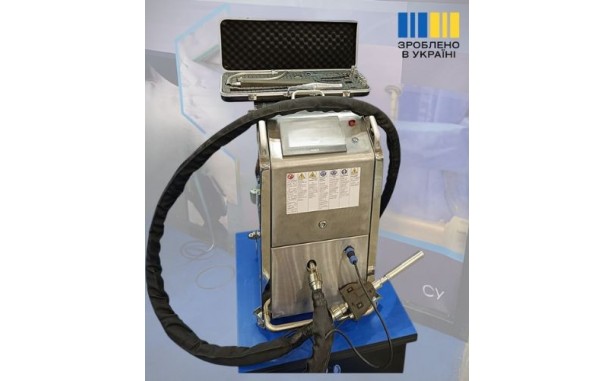
The dry ice machine is an innovative piece of equipment of our own production, which is sold in a complete set: with a gun, hose, and nozzle case. We guarantee the quality of this equipment and offer a full range of services for the supply of dry ice and maintenance of the machine. We provide a quality guarantee, post-warranty service and technical support.
TIZ Ice

"Tiz Ice" produces dry ice in granules ranging in size from 3 mm to 19 mm. We offer comfortable and favourable conditions for cooperation with customers on an ongoing basis under a contract. The minimum order is 5 kg.
Dry ice is shipped by Nova Poshta postal service from Monday to Saturday inclusive. Delivery within Ukraine takes 1-2 days. Pickup from our warehouse is also possible.
We have thermo boxes of various volumes from 3 kg to 80 kg, which maintain the optimal temperature regime for reliable packaging and transportation of dry ice.
For more information on the safe use of dry ice, please see our FAQ.
TIZ ICE is a manufacturer and supplier of complex innovative technologies for industrial cleaning systems - cryoblasters, which operate on the principle of dry ice blasting.
Dry ice cleaning (cryoblasting) is a technology for environmentally safe dry ice cleaning of any contaminants. The dry ice cleaning method has a number of advantages over other cleaning methods: non-flammable, non-abrasive, fast cleaning, sterile, anti-bacterial effect, environmentally friendly technology, cleaning in hard-to-reach places, cleaning without stopping the enterprise, does not require many people to maintain the apparatus, and is affordable. The unique properties of dry ice make it an ideal cleaning tool for delicate surfaces.
- lack of smell and taste;
- non-toxicity;
- non-flammability.
- without taste and smell;
- does not leave traces of melting during evaporation;
- sterile product, can be used for food purposes;
not poisonous;
- fire hazard;
- has a fast and strong cooling effect;
- has the property of evaporating at temperatures above -78°С;
- causes irritation and burns in direct contact with the skin.
- Dry ice must be stored in insulated containers. The thicker the insulation, the less dry ice sublimation will be.
- It is allowed to store dry ice in a freezer with the condition of ventilation once a day and in small volumes (up to 50 kg).
- It is not recommended to store dry ice in a completely sealed container, because dry ice turns into carbon dioxide, which in a completely sealed container can cause an explosion.
- Sublimated carbon dioxide has a molecular weight greater than that of oxygen in the air, so it "settles" in the lower layers of the room, which can lead to suffocation.
- do not work without protective gloves, contact with the skin can cause frostbite (similar to burns);
- when storing and transporting large amounts of ice, the vehicle or premises should be regularly ventilated;
- do not allow contact with the skin;
- store in a place inaccessible to children;
- do not pour into pools or reservoirs and swim;
- do not stay for a long time in the room in which the sublimation (evaporation) of dry ice took place;
- after creating the "heavy smoke" effect, ventilate the room well;
- it is forbidden to use granules with food or drinks in utero;
- do not store or transport without special boxes.
Compliance with safety rules for handling dry ice is the guarantee of your life and health!
the transportation industry uses dry ice to transport food over long distances. Even airports cannot do without this component, providing them with thermoboxes that can keep fresh lunches during a long flight;
restaurant business, since in the process of evaporation of ice carbon dioxide, dry white smoke is formed, this property is often used to create additional special effects when serving food and drinks;
in medicine, it is used for transporting organs, blood, medicines, etc.;
in the entertainment field, it is widely used to create special effects of smoke and fog at weddings, concerts, and children's events;
used in research institutes when conducting experimental work that requires low temperatures;
used in the machine-building industry for cold insertion of parts, hardening of special steels, storage of duralumin rivets;
in the chemical industry, it is used for processing plastic masses, production of dyes, explosives, etc.